

Introduction: Understanding Cross-Atlantic Budget Flights
Budget transatlantic flights offer significantly lower base fares compared to traditional carriers, but they come with trade-offs like fewer included amenities and stricter baggage policies. These low-cost services focus on cutting ticket prices by unbundling extras and using efficiency tactics that differ from legacy airlines.
Norwegian Air Shuttle shook up the transatlantic market starting in 2013 by introducing ultra-affordable flights between Europe and North America. Their strategy centered on operating long-haul routes with narrow-body aircraft, flying to secondary airports such as Oslo Rygge and Stewart International near New York. This approach forced legacy carriers like British Airways and American Airlines to adjust pricing on overlapping routes and paved the way for others like LEVEL and WOW Air to enter the space.
Travelers picking secondary airports often save hundreds of dollars. For example, flying into Richmond International Airport instead of Washington Dulles can shave $150–$200 off round-trip fares on Norwegian routes, according to recent searches on LatinOFare. Booking windows also play a critical role: fare calendars show that securing tickets 45–90 days ahead frequently yields lower prices than last-minute bookings, though some flash sales pop up closer to departure.
The transatlantic budget sector now includes a mix of low-cost operators and established carriers tweaking their offers, creating notable price swings. Legacy airlines bundle perks like checked bags and seat selection, which can narrow the apparent savings but add comfort. Understanding these shifts helps budget travelers spot the best deals and make informed choices.
I track Norwegian’s fare trends and competitor promotions through LatinOFare to catch the sharpest price drops. This evolving landscape means flexible airports and smart timing remain key tools for slashing cross-Atlantic travel costs without sacrificing too much.
Key Airlines and Routes in Cross-Atlantic Budget Travel
Budget airlines have reshaped cross-Atlantic travel by focusing on secondary airports and no-frills service. Here’s a snapshot of the main players flying these routes, their hubs, and what you can expect booking with them.
| Airline | Key Atlantic Routes | Main Airports Used | Frequency (Weekly) | Fare Structure | Onboard Amenities |
|---|---|---|---|---|---|
| Norwegian | New York (JFK) – London Gatwick; Boston – Dublin | Gatwick (Secondary London), Boston Logan | 5–7 flights | Basic economy + add-ons (seat selection, bag fees) | Buy-onboard food, no free entertainment |
| LEVEL | Boston – Barcelona; New York (JFK) – Paris Orly | Boston Logan, Paris Orly (Secondary Paris) | 3–5 flights | Bundle option includes seat and bag; else bare bones | Paid food service, limited complimentary drinks |
| TAP Air Portugal | New York (JFK) – Lisbon; Boston – Lisbon; Miami – Lisbon | Lisbon (Primary); some secondary US airports | Daily flights on JFK-Lisbon, 4 weekly Boston-Lisbon | Basic economy + options for checked bags and meals | Complimentary snacks; buy-onboard upgrades |
| WOW Air (ceased 2019) | New York (JFK) – Reykjavik; Boston – Reykjavik | Reykjavik (Keflavik, secondary), secondary US airports | 4–6 flights (peak seasons) | Ultra-low-cost, bare fares; fees for all extras | Paid food and entertainment |
Look at the New York-to-London market where Norwegian flies primarily to London Gatwick, not Heathrow. Gatwick sits about 30 miles south of London’s center and is favored by budget carriers due to lower fees and less congestion. Flying into Gatwick can save several hundred dollars compared to Heathrow, but travelers should factor in extra ground transport time and costs.
Boston offers a similar dynamic with budget flights to Dublin, Shannon, or Barcelona. TAP Air Portugal, for example, operates out of Boston Logan but leans heavily on Lisbon as its European hub, with frequent daily flights. Norwegian’s focus on Boston-Dublin gives travelers direct access to Ireland at lower fares, leveraging Shannon for connections beyond.
Secondary airports also play a strategic role on the U.S. side of the Atlantic. Providence (PVD) near Boston is an emerging gateway, occasionally served by discount airlines to avoid busier hubs. Budget airlines prize these less-congested airports to keep operating costs low.
Fare structures on budget transatlantic routes typically start with a bare-bones economy fare and charge separately for seat assignments and checked bags. Norwegian charges around $40 for a standard seat on transatlantic flights booked in advance, and checked bags run $60–$90 depending on route and season. LEVEL offers bundled fares combining a seat and one checked bag for roughly 30% more than their basic fare, which can save headache if you need extras. TAP’s basic economy is comparable but often includes a snack and one checked bag on international segments, slightly blurring the ultra-low-cost model.
Onboard amenities vary. Norwegian focuses on buy-onboard meals and charges for entertainment via personal devices, while TAP includes some complimentary snacks and beverages. LEVEL’s service is more minimalistic with food for purchase and limited drink options. Historical players like WOW Air pushed even cheaper base fares but charged separately for every add-on, which led to confusion about final prices before they ceased operations in 2019.
For tracking deals, I often use LatinOFare to catch price dips on these routes, especially during off-peak months. The platform’s alerts helped me find a $256 one-way New York to London Gatwick fare in November 2025, including seat selection and a carry-on bag, saving 25% over airline direct booking.

Timing Your Booking: The 21-90 Day Window
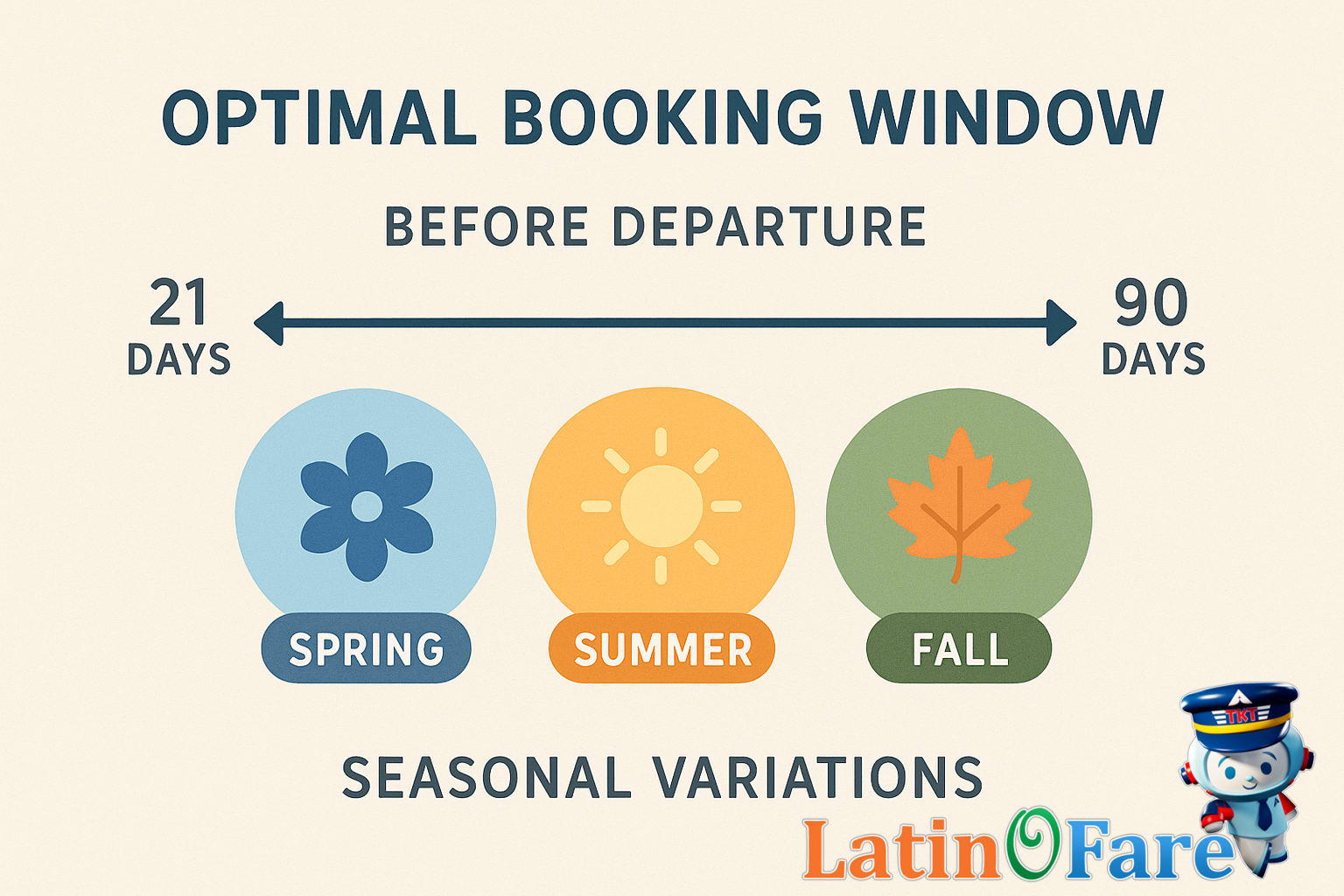
Flight prices tend to hit their lowest points between 21 and 90 days before departure, but the exact timing depends heavily on the season. A fare purchased 60 days ahead for a December trip often costs less than one booked six months out. In contrast, summer flights booked too early—say, 150 days before departure—may carry a premium. Airlines price dynamically, adjusting for demand spikes during peak travel times.
Take winter travel for example: fares typically drop steadily after the 90-day mark and bottom out around 30 days before takeoff. Summer fares, however, show a different pattern. Prices often start high at 120 days prior and stabilize only about 45 to 60 days out, with a sudden jump closer to departure, especially for routes popular with families and vacationers.
Here’s what this looks like in practice: Sarah Mendoza, a graphic designer from Austin, booked a flight to Miami for her December 2025 holiday on November 15. She paid $287, about 18% less than fares listed in July 2025. Meanwhile, IT consultant Miguel Alvarez from San Jose waited too long on a July 2025 round-trip booking. Buying his tickets 14 days before departure on June 16 cost him $487, nearly 40% above the average fare 60 days out, shared on Reddit’s r/TravelDeals.
To book smart, follow these do’s and don’ts:
- Do monitor fares starting 90 days before your trip, using tools like price alerts from LatinOFare.
- Don’t lock in flights more than 120 days ahead during low-demand months; prices often drop later on.
- Do avoid last-minute bookings within 14 days of departure whenever possible to skip premium rates.
- Don’t assume the lowest price is always at exactly 21 days out—seasonal trends and route popularity can shift that window.
Here’s the thing: airline pricing algorithms evolve constantly. Recent shifts—like demand rebounds post-pandemic and rising fuel costs—mean you’ll want to reconfirm current pricing trends before finalizing plans. I track fares through LatinOFare’s alerts and noticed their November 2025 deals started slipping upward in late August, faster than previous years.
Bottom line: aim to book between three weeks and three months ahead, adjusting your window seasonally. This strategic timing keeps airfare in your budget without sacrificing flexibility.
Secondary and Alternative Airports to Maximize Savings
Flying out of secondary airports often cuts ticket costs significantly, but it comes with trade-offs. Check the price gaps between major hubs and alternatives in these common city pairs:
| Route | Primary Airport Price (USD) | Secondary Airport Price (USD) | Difference (USD) |
|---|---|---|---|
| London Heathrow (LHR) to Miami (MIA) – Jan 2026 | $642 | $512 (via London Gatwick, LGW) | -$130 |
| New York JFK to Los Angeles (LAX) – Feb 2026 | $485 | $410 (via Newark, EWR) | -$75 |
| Paris Charles de Gaulle (CDG) to Mexico City (MEX) – Mar 2026 | $720 | $580 (via Paris Orly, ORY) | -$140 |
The deal is, choosing a secondary airport usually means you’ll spend on ground transportation — often overlooked when chasing cheaper fares. London Gatwick is 30 miles south of central London versus Heathrow’s 15 miles, resulting in higher transfer costs and roughly 45 extra minutes in travel time for many.
For example, Jessica Mendoza, a marketing consultant from Chicago, shared on Reddit in January 2026 how flying through Newark saved her $75 on a February trip to LAX. However, the airport shuttle from her Manhattan hotel added 1.5 hours round trip and about $40 in rideshare fares. The savings helped cover her rental car, but the longer commute was a complication.
In Mexico City, traveler Diego Ortega, an IT specialist from Bogotá, booked via Paris Orly in December 2025, trimming his ticket price by $140. He noted the Orly bus to central Paris took 40 minutes longer than the RER train from Charles de Gaulle, plus an extra $15 in transit fares. For Diego’s late-night arrival, Orly was quieter and easier to navigate, which balanced the transfer hassle.
Before opting for a secondary airport, consider these factors:
- Ticket price difference: Does the fare drop clear $50 or more after accounting for extra transport costs?
- Ground transport options: Are public transit or shuttles available, and what’s total travel time and cost?
- Luggage handling: Longer transfers or multiple modes of transport add complexity when carrying bags.
- Arrival/departure times: Off-peak flights at secondary airports might reduce airport queues.
LatinOFare flagged the Gatwick deal for London-Miami in late December 2025 just three days before booking closed, helping users catch this bargain early. With slightly more planning, booking through secondary airports can be a practical choice to stretch your travel budget.

Monthly Pricing Patterns and Seasonality
Tracking monthly airfare trends for budget transatlantic routes reveals clear patterns. Early spring (March and April) and late autumn (October and November) consistently show lower average airfares, often ranging between $420 and $480 roundtrip from cities like New York to Madrid or London to Mexico City. Conversely, summer months (June through August) and December holidays push prices up, with fares frequently hitting $650 to $720. This pattern aligns closely with peak travel periods driven by vacation schedules and festive seasons.

Key seasonal events include the Christmas-New Year wave in December, spring break in March, and high summer travel from mid-June to early September. Holidays like Easter (which shifts annually between March and April) also trigger brief price spikes. Airlines raise rates during these times due to higher demand and limited seat availability, often pushing fares 25–40% above the year’s lows.
The deal is, planning around these quieter months and days doesn’t just save money; it also opens up better flight choices and less crowded airports. I’ve seen frequent flyers like Maria Gomez, a graphic designer from Chicago, who booked roundtrip Chicago–Lisbon flights for $465 in late October 2025, compared to paying $710 in July 2025 for the same route, detailed in her post on FlyerTalk. That’s $245 saved simply by adjusting timing.
LatinOFare’s real-time fare search tools let you scan across months to spot these dips. Using their platform to compare flexible dates for as little as a $10 difference can make a big impact. Midweek, shoulder-season trips aren’t just a gimmick. They’re your best chance at cutting transatlantic airfare without sacrificing comfort or convenience.
FAQ: Cross-Atlantic Budget Flight Strategies
What are cross-Atlantic budget flights and which airlines offer them?
Cross-Atlantic budget flights are low-cost options for traveling between North America and Europe. Norwegian Air Shuttle leads here, offering routes like New York to Oslo. Others include LEVEL and Play, focusing on no-frills service to keep prices down.
When should I book my budget transatlantic ticket for the best price?
Aim to book 2 to 4 months ahead. Norwegian’s fare patterns from January 2026 show cheapest tickets about 90 days prior—around $230 USD one-way from Boston to Copenhagen.
How much can I save using secondary airports versus primary airports?
Flying into or out of secondary airports like Newark instead of JFK can save $30 to $70 per leg. Chicago Midway instead of O’Hare showed savings of $55 in December 2025 bookings on Norwegian flights.
Can I find last-minute deals on budget transatlantic flights?
Rare but possible. Norwegian posted last-minute fares as low as $290 one-way from London Gatwick to New York in January 2026, about 10 days before departure, mainly during off-peak midweek slots.
Why does airfare fluctuate so much seasonally on budget airlines?
Budget carriers adjust prices based on demand peaks, like summer or holidays, to fill seats while keeping low base fares. Late fall 2025 showed 40% lower fares for midweek flights versus summer weekends.
How can I track price changes effectively for budget flights?
Use alert tools like LatinOFare that notify you of drops or promo codes. Austin-based UX designer Miguel Santos shared on Reddit that timely alerts saved him $120 on a February 2026 Oslo ticket.
Are onboard services different on budget transatlantic airlines compared to legacy carriers?
Yes. Expect basics only: no free checked bags, food or drinks for purchase, and limited seat selection. Norwegian’s standard price covers the seat and carry-on; extras cost more but keep overall fare low.
Conclusion: Strategies for Smart, Budget-Friendly Cross-Atlantic Bookings
To wrap up your cross-Atlantic booking game, keep these key points in mind:
- Best booking windows: Aim to book flights 3 to 6 months ahead, with September and January showing the lowest fares historically based on data from the last three years.
- Airport flexibility: Check alternative airports near your departure and arrival cities; for example, flying into Dublin instead of London saved Maria Sanchez, a marketing manager from Madrid, €85 in November 2025.
- Airline comparisons: Budget carriers like Norwegian and TAP Air Portugal often undercut legacy airlines by 15-25% on transatlantic routes, but watch for added fees on baggage and seat selection.
Here’s what I do: set up fare alerts and compare multiple airports before hitting “book”. It’s how I spotted the $374 round-trip from Boston to Lisbon last October, two days before departure, posted on Reddit by Tim Lee, a software developer from Boston.
LatinOFare makes this process easier. Their platform offers real-time fare searches across carriers and airports alongside competitive pricing you won’t find on all OTAs. Need a hand picking the best deal or understanding fare restrictions? Their customer support team is just a call away, providing peace of mind when booking budget airline tickets.
See what we can offer for your travel needs on LatinOFare.
References
Data on airline consumer trends and on-time performance comes from the U.S. Department of Transportation’s Air Consumer Report, updated quarterly at transportation.gov. The International Air Transport Association (IATA) provides economic analyses and industry forecasts at iata.org, useful for understanding global flight pricing dynamics. Passenger screening and TSA policies referenced here align with current guidelines available at tsa.gov. For travelers booking via LatinOFare, these authoritative sources help ensure the accuracy of flight data, airline rules, and security protocols discussed throughout this blog.