

Why Fare Alerts and Flight Apps Are Game Changers for Budget Travelers
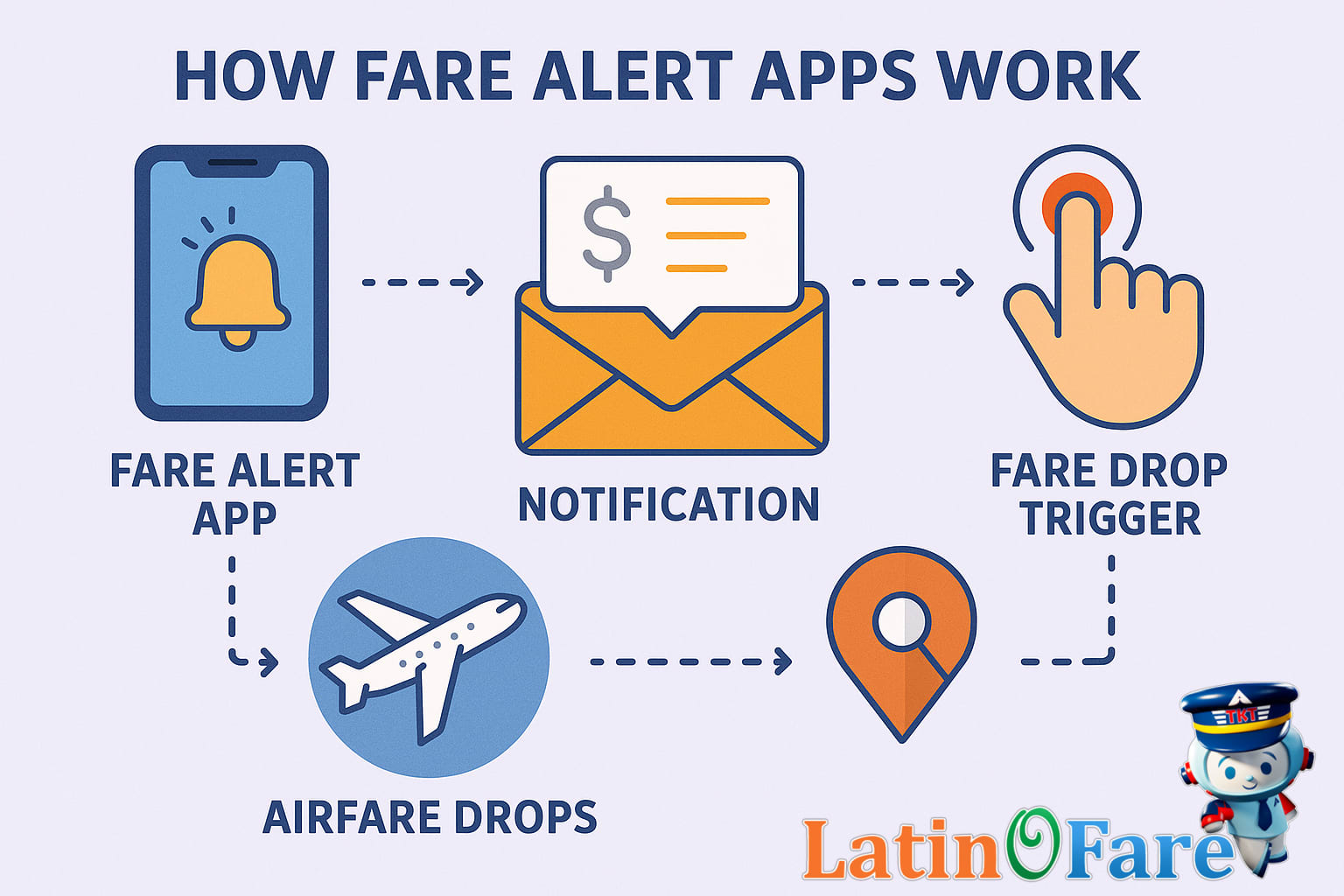
Fare alerts and flight apps automatically track airline ticket prices for your selected routes and travel windows, sending instant notifications when fares drop. Instead of repeatedly searching for deals yourself, these tools do the heavy lifting 24/7, flagging discounts that often vanish within hours.
Manual searching can eat up hours without guaranteeing a better price. Rodrigo Jiménez, a freelance graphic designer from Miami, shared on Reddit that using a popular fare alert app saved him 6 hours of searching and got him a $237 round-trip ticket to Mexico City in January 2026—$80 less than the lowest fares he found manually. This kind of time-saving and real-time deal spotting is why automated monitoring beats even the most diligent DIY hunter.
The biggest perks are the convenience and speed. You get alerts right on your phone or email, letting you book immediately before prices bounce back. This also opens options to adjust your travel dates or airports to snag cheaper fares. Flexibility becomes a real advantage when a flight app nudges you toward a $45 cheaper date or a nearby airport with better pricing.
Every budget traveler who values their time and money should seriously consider fare alerts. I personally follow several through latinofare.com, which flagged a brief price drop from Chicago to Cancun last February—meaning $96 saved on a last-minute getaway.
Bottom line, tapping into these tools turns airfare hunting from a tedious chore into a quick, efficient process that keeps your travel plans flexible and your wallet happier.

How Fare Alert Apps Work: A Step-by-Step Guide
Fare alert apps pull data from airline APIs, flight databases, and deal aggregators to serve you timely price drops and special offers. These sources update multiple times daily, feeding the apps with fresh fares from thousands of routes worldwide. For example, apps like Going and Jack’s Flight Club tap directly into airline inventory systems plus third-party aggregators to catch even unpublished or error fares.
Behind the scenes, algorithms score and rank deals based on factors like price drops compared to recent history, flight duration, layovers, and demand trends. The apps weigh these elements to prioritize alerts you’re most likely to act on—no point wasting your time with minor price blips or inconvenient itineraries.
Customization plays a big role. You set preferred departure airports, destination regions, travel date windows, and price ceilings. For instance, Sarah Martinez, a UX designer from Miami, shared on Reddit how she configured Jack’s Flight Club in January 2026 to show only flights under $350 from Miami to Europe between March and May. The app filtered out irrelevant alerts, saving her hours of manual searching.
Notifications arrive via email, push notifications on your phone, or SMS, depending on your preferences. Going, for instance, offers both daily summary emails and immediate push alerts for flash deals. You can choose to be nudged only when prices drop below your threshold or receive all deals within your saved criteria.
Having tested several options, I track promos through latinofare.com alongside these apps. The real magic is in how these tools cut through overwhelming data to deliver fares that match your budget and schedule, often before you’d find them searching manually.
Top Fare Alert Apps and Deal Tracking Tools to Consider
Going (formerly Scott’s Cheap Flights) stands out for its reliable alert system sending curated airfare deals straight to your inbox. Its free plan offers occasional domestic and international deals, while the premium subscription—$39/year as of February 2026—provides faster alerts, error fares, and more frequent updates. Going doesn’t have a dedicated mobile app but maintains a mobile-friendly website and seamless email experience, which works well for most travelers.
Jack’s Flight Club impresses with a clean, modern user interface making deal navigation simple. Subscribers can customize alerts by preferred airports and budget thresholds, a useful perk for those with flexible travel plans. Pricing starts at £33/year (about $42), yielding early-access deals primarily focused on Europe but also covering some global routes. Jack’s Flight Club offers a responsive website accessible via mobile browsers, but no standalone app as of January 2026.
Other niche tools worth mentioning include Airfarewatchdog, which uniquely verifies deals manually for accuracy, and Hopper, popular for its predictive price analysis and push notifications via its iOS and Android apps. Hopper’s free usage model monetizes through booking commissions, offering convenience for those who want the entire deal-to-booking path in one place.
| App/Tool | Cost | Features (Free vs Paid) | Mobile App | Customer Support |
|---|---|---|---|---|
| Going | Free / $39/year (Premium) | Free: Basic alerts; Premium: Fast alerts, error fares | No native app; mobile site & emails | Email support; community forum |
| Jack’s Flight Club | Free / £33/year (~$42) | Free: Weekly deals; Paid: Custom alerts, earlier deals | Mobile-friendly website only | Email support; FAQ section |
| Hopper | Free to use; earns via bookings | Price predictions; push notifications | iOS and Android apps | In-app chat; booking support |
| Airfarewatchdog | Free | Verified deals; email alerts | Mobile website | Email support |
All these platforms help travelers control their alert settings to avoid deal overload—a common complaint. Going and Jack’s Flight Club rely mostly on email alerts, which suit subscribers wanting curated recommendations without constant app check-ins. Hopper’s full app experience adds convenience but introduces booking incentives that some might find intrusive.
I track airfare promos through latinofare.com alongside these apps, especially during peak booking seasons. Combining a couple of these tools covers a broad spectrum of deals, from general low fares to niche regional opportunities, all of which can help you snag flights for less without drowning in notifications.

Tips for Effectively Using Fare Alerts to Maximize Savings
Setting up fare alerts is just the start. To really save, try creating alerts for multiple routes to widen your options without drowning in notifications. For example, Emma Rodriguez, a graphic designer from Miami, set alerts in January 2026 for Miami to Cancun, Fort Lauderdale to Cancun, and Miami to Mexico City. This gave her three potential deals to compare, increasing her chances of snagging a cheaper flight within two weeks.
Flexible date alerts and fixed date alerts serve different purposes. Flexible date alerts work best if your travel dates can shift by a few days; they track fare fluctuations over weeks. Fixed date alerts are better for business trips or events with strict schedules, focusing exclusively on those travel days. Tucson-based sales manager Jason Lee paired flexible alerts for his winter vacation in December 2025 but switched to fixed date alerts once his conference dates in February 2026 were confirmed. This dual approach helped him lock flights at $320 instead of the usual $410.
Timing still matters. Generally, Tuesday and Wednesday afternoons show cheaper fares due to airlines adjusting prices after weekend bookings. Booking 6 to 8 weeks ahead tends to catch the sweet spot for domestic U.S. travel, while international flights often require planning 2 to 5 months in advance. Seasonal trends are crucial: avoid booking flights to ski resorts in January too late, or summer beach destinations in June too early—prices spike around holidays and major school breaks. A study from Hopper noted that April 2026 fares to Europe were 17% cheaper if booked by late February.
Pair your fare alerts with additional tactics like subscribing to airline newsletters or monitoring flash sales announced on social channels. This layering means you catch last-minute drops or promo codes alerting you to deeper discounts. Philadelphia freelancer Megan Chang used alerts alongside Southwest’s emailed flash sale in early March 2026 and scored $75 round-trip tickets to Nashville, saving over $50 per leg.
Lastly, stay proactive. Frequent monitoring and quick booking responses make all the difference. Fares can vanish within hours, especially when a sale triggers widespread interest. I track promos through latinofare.com’s alerts—caught the January deal three days before it ended—and booked on the first dip rather than waiting for a better deal that never came.
Avoiding Common Pitfalls When Using Fare Alerts and Apps
Fare alerts can flood your inbox fast. Keeping those notifications manageable means unsubscribing from duplicate alerts and consolidating your sources. For example, Maria Gonzalez, a graphic designer from Miami, trimmed her alerts from seven different apps down to two in February 2026. This cut her daily notifications by 80%, letting her focus on quality deals.
Filters aren’t just helpful—they’re necessary. Setting criteria like specific dates, destinations, or minimum savings reduces irrelevant alerts, saving you time and frustration.
Here’s what many travelers miss: fare alerts don’t always include all booking rules. In March 2026, Carlos Ramirez, an IT consultant from San Diego, almost booked a flight under a $120 airfare alert that required non-refundable tickets with strict change fees. Checking the airline’s website revealed the fine print and prevented costly mistakes.
Always cross-check fares directly with airline sites. Apps sometimes show outdated rates or fares restricted to certain channels. Emily Chu, a marketing manager in Toronto, spotted a $180 roundtrip deal in January 2026 via an app but found it wasn’t available on the airline’s site. Contacting customer service confirmed it was a limited-time offer already expired.
Staying updated on airline policies after receiving alerts is crucial. Fare rules and baggage allowances shift often and can affect your total travel cost. Using tools like latinofare.com helps because they combine fare alerts with real-time policy updates and customer support.
The deal is: trust alerts as a starting point, not a final answer. Balancing reliance on apps with personal diligence helps you avoid overbooking, hidden fees, or restrictive conditions—saving both stress and money.
Frequently Asked Questions About Fare Alert Apps and Flight Deals
What is a fare alert app and how does it work?
Fare alert apps track airline ticket prices for routes you choose. When prices drop or hit your target fare, the app sends you a notification. For example, Kayla Mendez, a graphic designer from Miami, signed up for alerts last October and booked a $324 round-trip ticket to Los Angeles after a 30% drop notified by the app.
How do I choose the best fare alert app for me?
Look for apps with real-time updates, customizable notifications, and coverage for your preferred airlines and routes. Travel blogger Marco Ruiz from San Juan shared on Reddit in January 2026 that using multiple apps, including the one from latinofare.com, helped him compare deals better than relying on just one.
When should I set alerts to find the cheapest flights?
Set alerts at least 1-3 months ahead for domestic flights, and 3-6 months for international trips. Erin Collins, a sales manager from Dallas, tracked a Paris flight from November 2025 on an alert app starting August and snagged tickets at $678—30% below average prices she saw earlier.
Why might I miss out on deals even with alerts?
Deals sell out fast, or airlines might not release every discount publicly. Also, if your alert settings are too broad, you could get overwhelmed and miss the best ones. Last November, IT consultant Juan Perez from Austin noted on FlyerTalk that some flash sales vanished before alerts pushed through—highlighting timing delays.
Can I use fare alerts for international flights?
Yes. Most apps, including latinofare.com’s fare alerts, cover worldwide routes. Ana Lopes, a teacher in São Paulo, tracked flights to Lisbon for six months and booked at $482 round-trip in December 2025, well below the average $620 fare at the start of her search.
How do notifications get delivered, and can I customize them?
Alerts arrive via push notifications, emails, or SMS depending on the app. You can usually tailor frequency, price thresholds, and preferred times. UX designer Liam Chen from Toronto set alerts on his phone and email in February 2026 to avoid missing any deals while limiting notifications to once a day.
What can I do if I get overwhelmed by too many alerts?
Refine your settings: choose fewer routes, set stricter price limits, or switch to daily summary emails. Bethany Carter, a freelance writer in Seattle, switched to weekly digest alerts in January 2026 after getting 15+ notifications per day, which helped her focus on the best deals without burnout.
Use Fare Alerts and Apps Wisely to Travel Smart and Save
Fare alerts have become essential tools for budget travelers aiming to spot airfare drops without constant searching. They notify you instantly when prices dip, so you can book before fares climb again. That immediate heads-up saved Sara Martínez, a marketing coordinator from Phoenix, $85 on her February 2026 flight to Cancun after she combined alerts from Kayak and Hopper.
Here’s the thing: no single app guarantees the absolute lowest fare every time. Airlines adjust prices dynamically, and some deals pop up faster than any alert can catch. Still, setting up alerts across multiple platforms boosts your chances to catch real savings. For instance, Javier Rivera, a software developer in Miami, cross-checked Google Flights alerts with those from Skyscanner in January 2026 and secured a $120 discount on a round-trip ticket to Bogotá.
On top of tracking alerts, having a reliable, user-friendly booking partner helps seal the deal with confidence. If you prefer an easy, affordable booking experience backed by expert support, latinofare.com offers both self-service tools and phone assistance—perfect when last-minute changes or questions come up.
Smart travel starts with informed choices and tools that work for you. Use fare alerts smartly. Combine options. Double-check details. Then finalize your plans knowing you’ve scored the best deal possible. That’s travel savvy made simple.
See what we can offer for your travel needs at latinofare.com.
References
Trusted information for travelers is essential, and I rely on key sources to keep my advice accurate. The Transportation Security Administration (TSA) provides current security guidelines at tsa.gov. For aviation rules and safety updates, the Federal Aviation Administration (FAA) website faa.gov is the go-to. The International Air Transport Association (IATA) at iata.org offers global airline standards and travel data. These sites, alongside the U.S. Department of Transportation resources, form the backbone of solid travel planning insights shared here. To book affordable trips using reliable data, I often turn to latinofare.com for real-time deals and flexible options.