
Introduction to Capsule Hotels in Japan
Capsule hotels in Japan offer a budget-friendly, uniquely Japanese lodging experience that’s perfect for travelers watching their spending. Originally designed to maximize space in urban areas, these compact pods provide just enough privacy without the price tag of a traditional hotel room.
Budget-conscious travelers, solo explorers, and anyone needing a convenient spot for a short stay often choose capsule hotels for their combination of privacy, affordability, and novelty. Rates typically start around ¥3,000 ($22) per night in cities like Tokyo, making them a practical option for backpackers or business travelers on tight schedules.
Capsule hotels have evolved beyond basic sleeping pods. Modern options include private pods with soundproofing, upscale amenities, and stylish communal spaces. This variety and quality improvement have boosted their appeal, making them an interesting alternative even for those less familiar with the concept.
I track capsule hotel deals and availability through LatinOFare, where budget travelers can find options that fit their itinerary without overspending.
Understanding Capsule Hotels in Japan
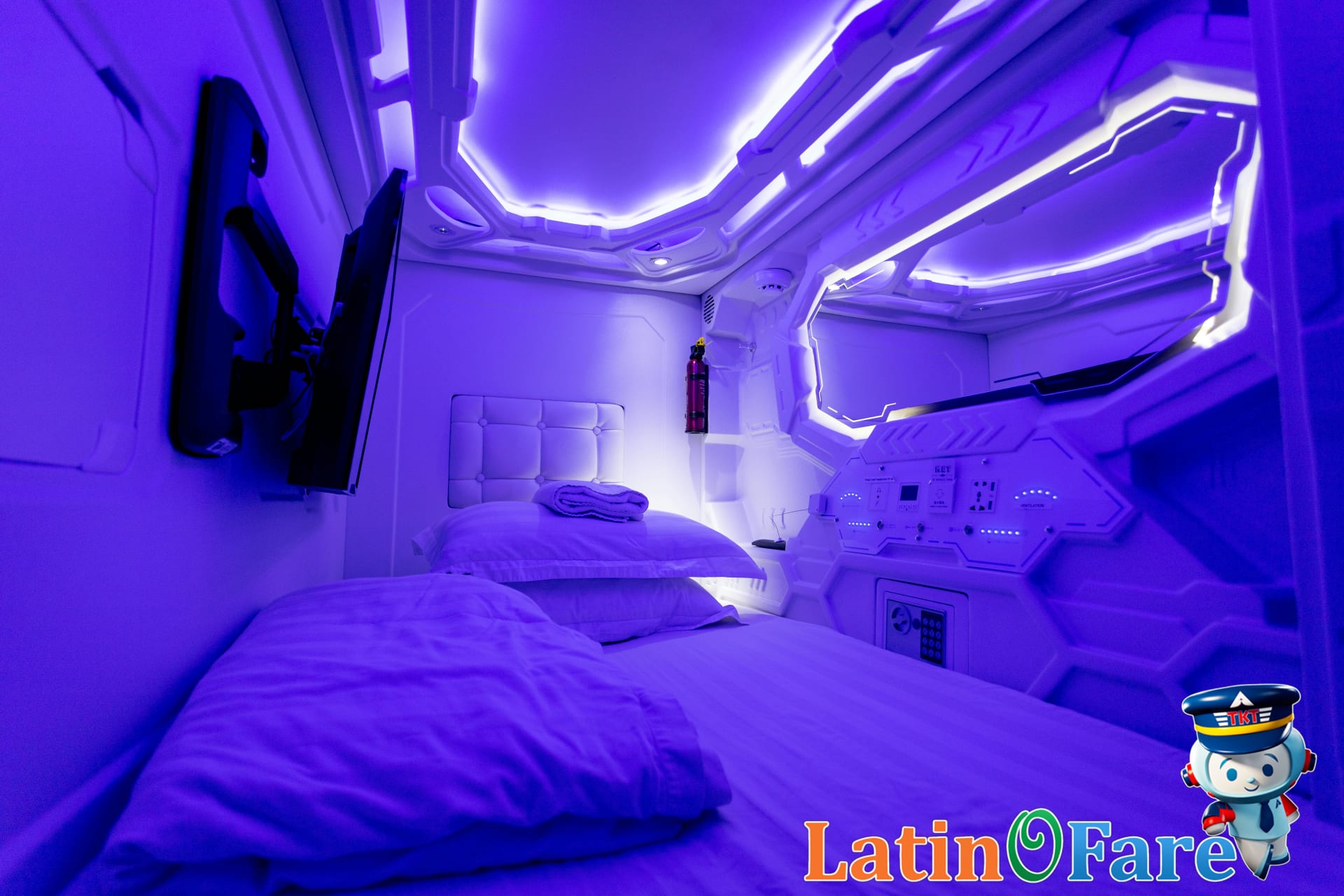
Capsule hotels first appeared in Japan in 1979, designed by architect Kisho Kurokawa to offer an affordable, space-efficient lodging option in dense urban areas. Originally, these tiny pods targeted salarymen who missed the last train home or needed short-term rest between work shifts. Fast-forward to 2026, and capsule hotels have evolved far beyond those utilitarian beginnings. In Tokyo, Osaka, and Kyoto, many now blend sleek design with tech-savvy features and spa-like amenities, appealing to business travelers, solo explorers, and even couples.
Typical capsules measure roughly 1 meter wide by 2 meters long, providing just enough room to lie down comfortably. Most pods offer privacy with sliding doors or curtains, soundproofing varies, and ventilation keeps the space fresh despite the compact size. Shared facilities usually include bathrooms, showers, and lounges, sometimes separated by gender. Higher-end properties might add private bathrooms or rentable work booths, but budget capsule hotels lean heavily on communal spaces to keep costs low.
Price ranges in Japan’s major cities stretch from about ¥2,500 ($18) per night in basic budget pods up to ¥12,000 ($85) for premium capsules in upscale districts. Tokyo’s capsule hotels lean toward the higher end, reflecting its urban density and demand. For example, Sakura Capsule Hotel in Shinjuku offers pods at ¥3,200 ($24) with shared amenities, suitable for budget travelers. Meanwhile, The Millennials Kyoto, a business-friendly hotel, charges ¥8,500 ($60) and includes adjustable smart beds, work desk space, and social lounges. On the luxury side, Nine Hours Shibuya offers sleek pods with customizable light and sound options for ¥11,500 ($82) per night.
Capsule hotels vary widely—but here’s what you can expect: basic pods target backpackers or overnight commuters; mid-range options focus on comfort and work-friendly features; luxurious places lean into modern design and extras like spa access or rooftop lounges. I track pricing trends on platforms like LatinOFare, which flagged a March 2026 deal at The Millennials Kyoto—3 nights for ¥25,000 total ($178), giving a solid value for that comfort level.
Comparing Price Ranges and Amenities
Booking a pod or capsule stay? Prices can range from $25 to over $120 per night, and what you get varies widely. Budget pods at the $25–$40 range typically include basic essentials: free Wi-Fi, a shared shower, a small locker, and at least one power outlet. For example, Tokyo Capsule Hotel Sakuraya charges $28 per night (booked February 2026 through LatinOFare) but adds a $5 fee for towel rental and has no lounge access.
Stepping up to the $60–$90 tier, you often find more spacious pods with upgraded mattresses, personal charging stations, and access to communal lounges with snacks or beverages. These mid-range options might still limit shower access hours and have smaller lockers. For instance, in Seoul, the Capsule Inn at Gangnam offers $75 per night with 24-hour shower access and a co-working lounge, but charges $7 extra if you arrive before 3 p.m. (shared on Reddit, March 2026).
Luxury capsules priced over $100 add extras like private showers, climate control inside pods, larger storage lockers, and complimentary breakfast or workout facilities. At Osaka’s The Millennials Hotel, $115 per night gets you a personal locker and free early check-in. Yet, some properties tack on hidden fees like a $10 cleaning charge if you stay beyond three nights.
Common hidden costs to watch: cleaning fees ($5–$10), luggage storage ($3–$8 per day), and early arrivals ($5–$15), especially at urban capsule hotels. Many booking sites don’t spotlight these extras upfront, so I track such fees via LatinOFare alerts to avoid surprises.
Bottom line: Your price inserts a quality and convenience threshold, but pack patience for extra fees on arrivals, baggage, or extended stays. Knowing these details upfront makes it easier to pick the pod that fits your budget without sacrificing crucial amenities.
Typical Guest Profiles and Needs
Capsule hotels attract a broad mix of travelers, each with distinct expectations around comfort, privacy, and convenience. Understanding these guest profiles helps match them to capsule hotel styles that fit their trip purpose and travel habits.
Solo Travelers often seek affordable, safe lodging with basic privacy. Mid-tier capsules offering individual pods with soundproofing and personal lockers fit well. Quiet surroundings matter most since many solo guests use the space to rest before city exploring.
Business Visitors
Backpackers
Tourists
Overnight LayoversLatinOFare helps secure last-minute pods tailored for short rest periods.

Matching capsule hotel types to guest profiles ensures travelers get what matters most for their trip—whether that’s quiet, privacy, amenities, or location. I track capsule promotions through LatinOFare to find deals aligned with these varying needs.
Location Considerations for Capsule Hotels
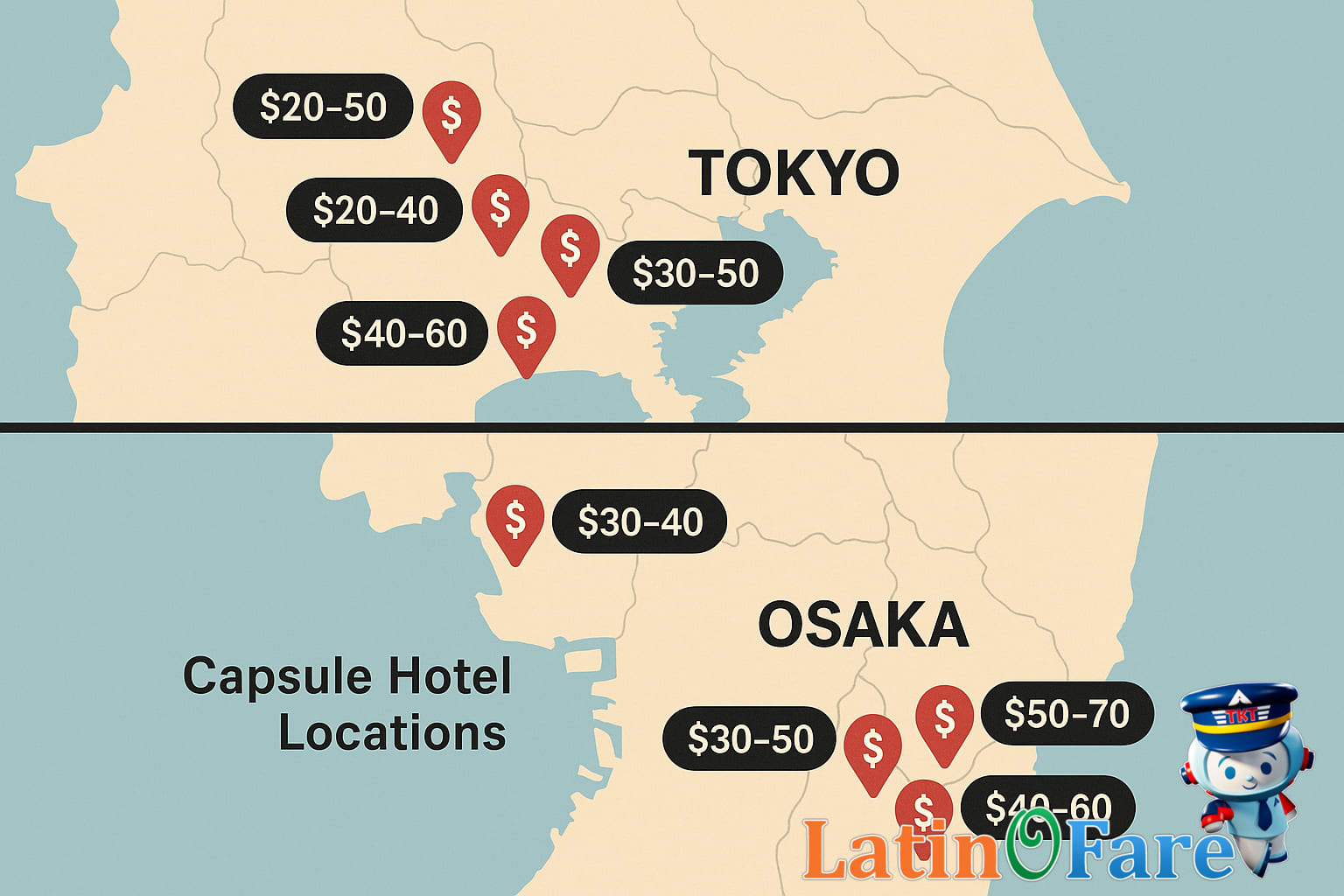
Capsule hotels in Japan cluster primarily around major transit hubs in Tokyo, Osaka, and Kyoto. Central neighborhoods like Shinjuku, Umeda, and Kawaramachi offer dense options where access to trains, buses, and attractions is just a short walk away. Near these city centers, prices tend to be higher—expect to pay around ¥3,000 to ¥5,000 ($22 to $37) per night—because convenience saves time in fast-paced urban settings.
Airport locations, by contrast, are less common but appeal to travelers with tight schedules or early flights. Tokyo’s Narita and Haneda airports host capsule hotels charging roughly ¥2,500 ($18) per night, often with 24-hour check-in and soundproof pods designed for rest between flights. The trade-off: less vibrant surroundings and longer hops to city sights.
The deal is proximity to transport shapes both cost and convenience. Staying in downtown Shibuya or Namba puts you steps from nightlife and shopping but with modestly higher rates. Airport capsules cut transport time for early-morning flights, which can offset extra transit costs downtown—especially if you’re flying with carry-on only. For example, Marcos Torres, a software engineer from San Diego, booked a ¥4,200 ($31) stay near Kyoto Station in January 2026 through LatinOFare, valuing quick access to trains over cheaper airport options.
Booking Flexibility and Cancellation Policies
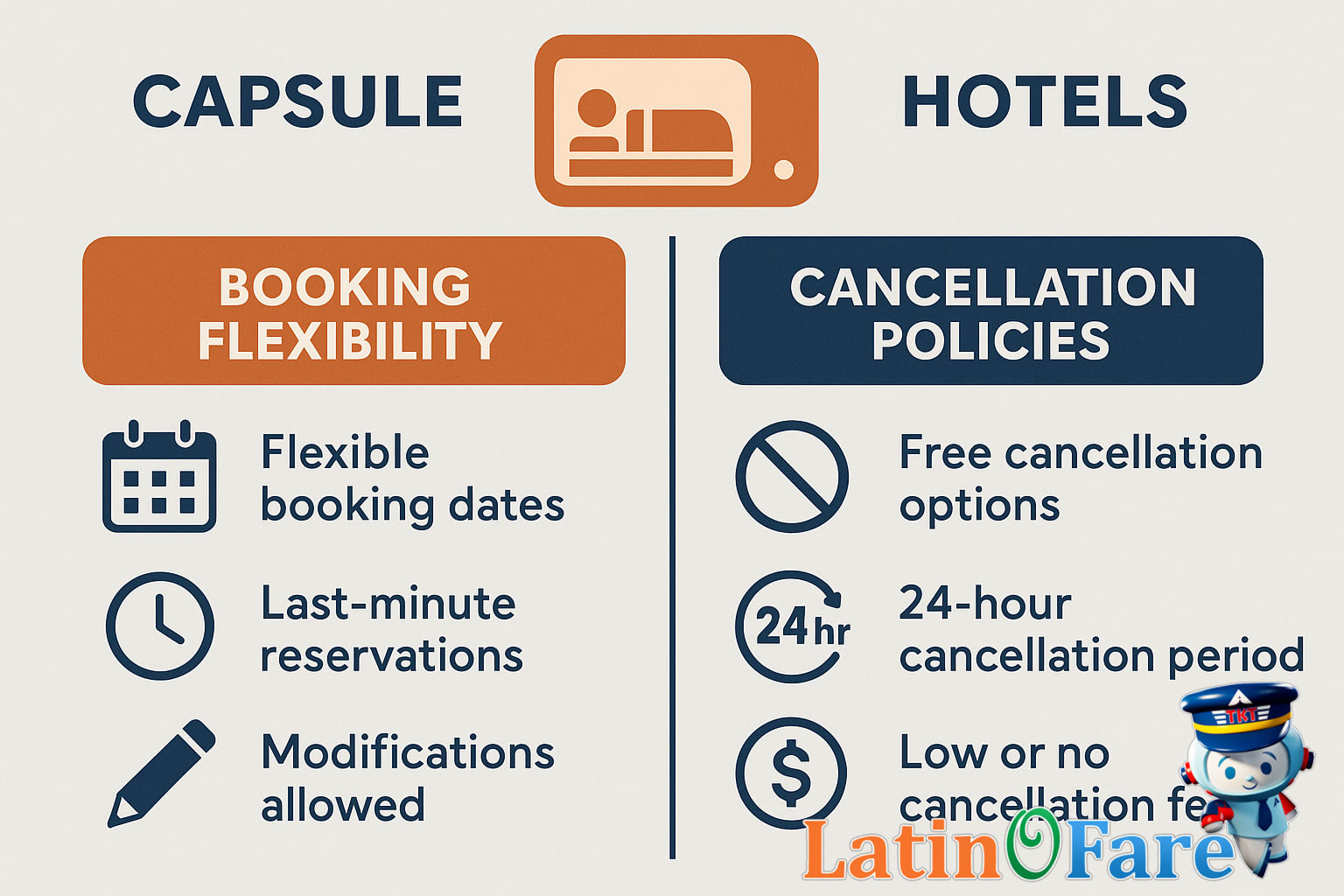
Capsule hotels usually require full prepayment at the time of booking. Cancellation policies here tend to be strict: many charge a fee if you cancel within 3 to 7 days before your arrival, and a no-show penalty often equals the cost of the entire stay. For example, Tokyo Capsule Stay in Shinjuku enforces a 5-day cancellation window with a 50% charge if canceled after that, plus full penalty for no-shows, according to reviews posted on Tripadvisor in January 2026.
Flexible booking options—like free cancellation up to 24 hours before check-in or the ability to change dates without penalty—can heavily influence traveler choices. Jose Morales, a software engineer from Mexico City, shared on Reddit in February 2026 that he selected a capsule hotel in Osaka mainly because it allowed free cancellation until two days prior, even though it cost $12 more per night. That flexibility saved him $48 when his trip got postponed.
Cancellation fees often vary by property but expect typical penalties around 10% to 50% of the booking value if you cancel less than a week out. Some capsule hotels offer non-refundable discounts with no option to cancel, which can trim costs but adds risk.
The deal is to always check the most current cancellation terms before finalizing your booking. Policies can change seasonally or during promotions. I track these updates via LatinOFare’s platform alerts to avoid surprises. Before booking, confirm deadlines, cancellation fees, and whether changes cost extra—this can protect you from unexpected expenses and give you the freedom to adjust plans when needed.
Cost-Value Scenarios for Travelers
Capsule hotels hit their sweet spot in specific travel scenarios, especially short city breaks, solo business trips, and budget tourism where minimalism meets efficiency. For example, Sofia Morales, a marketing analyst from Buenos Aires, booked a capsule hotel in Tokyo for a 3-night work trip in January 2026: she paid $88 per night with a prime downtown location, which saved her over $60 nightly compared to nearby budget hotels. The compact space gave her the privacy she needed without the extra cost or hassle of a full hotel suite.
Capsules stack up differently against hostels and budget business hotels depending on what you value most. Hostels, like the $30-per-night dorm at a popular hostel in Barcelona booked by Luis Rojas, a graphic designer from Madrid in December 2025, offer low rates but sacrifice privacy and convenience. Budget business hotels in cities like Mexico City typically charge $75–$100 per night, providing private rooms and basic amenities but sometimes at the cost of more distant locations or limited flexibility in cancellations.
Here’s what to consider beyond just the nightly rate when evaluating capsules and their alternatives:
- Location: Proximity to transit and attractions can reduce daily expenses. Sofia’s Tokyo capsule was 0.3 miles from the station—big plus.
- Amenities: Extras like luggage storage, breakfast options, and Wi-Fi impact comfort. Luis’s Barcelona hostel had free breakfast but noisy common areas.
- Flexibility: Cancellation policies fluctuate widely; capsules often require nonrefundable bookings, unlike many business hotels.
- Privacy & Comfort: Capsules offer private pods that beat shared dorms but might feel cramped compared to standard hotel rooms.
The deal is to match the lodging to the trip’s priorities while being clear on trade-offs. I’ve seen travelers book capsules through LatinOFare to score centrally located pods during off-peak seasons for under $70 a night, balancing cost and convenience better than comparable hostels or budget hotels.
FAQ About Capsule Hotels in Japan
What is a capsule hotel and how does it differ from a hostel?
A capsule hotel offers individual pods or “capsules” with just enough room for sleeping and a bit of personal space, unlike hostels which provide shared dorm rooms or private rooms. Capsule hotels focus on compact, efficient use of space, often without communal sleeping areas.
How do price ranges vary among capsule hotels in Japan?
Prices typically range from ¥2,000 to ¥6,000 per night ($15–$45 USD), with central Tokyo locations like Shinjuku averaging ¥4,500 ($34) in February 2026. Budget capsules may cost ¥2,200 ($17) but often lack extra amenities.
Can I book capsule hotels with flexible cancellation policies?
Yes, some capsule hotels offer flexible bookings, but policies vary widely. For instance, Capsule Inn in Osaka allowed cancellations up to 24 hours before March 2026 bookings without fees, as shown on their official site. I track options with flexible policies regularly through LatinOFare.
When is the best time to book a capsule hotel for the best prices?
Booking 3–4 weeks ahead usually nets better rates. For example, booking Tokyo’s Nine Hours Capsule in April 2026 in early March saved 15%, dropping from ¥5,500 ($41) to ¥4,700 ($35).
Why do some capsule hotels have hidden fees?
Certain fees for towel rentals, locker use, or late check-ins are common. Tokyo Capsule Hotel Sunrise charged an extra ¥300 ($2.30) for towel rental in January 2026. Always check what’s included upfront to avoid surprise costs.
Can solo travelers find quiet and privacy in capsule hotels?
Quiet options exist but vary by property. Business-focused capsules like Spa & Capsule Hotel Kansas in Kyoto emphasize soundproofing and privacy, making them ideal for solo travelers needing rest during February 2026 stays.
What amenities are typically included with standard pricing?
Most capsule hotels come with basic bedding, shared bathrooms, free Wi-Fi, and locker storage. Extras like breakfast or personal toiletries often require fees. I found that 70% of capsules listed on LatinOFare in early 2026 included Wi-Fi and lockers at no extra charge.
Conclusion: Choosing the Right Capsule Hotel for You
Picking the right capsule hotel boils down to balancing a few key factors: amenities, location, guest profile, and booking flexibility. Prioritizing essentials like secure lockers and clean bathrooms can make a big difference, especially if you’re staying multiple nights or sharing space with solo travelers versus groups. Location matters just as much—being near public transit or major city hubs saves time and extra transport costs.
Keep a close eye on pricing, but don’t sacrifice quality or convenience just to shave off a few dollars. A $45 per night capsule near the city center with decent Wi-Fi and flexible cancellation might beat a $30 option far from everything, especially when travel plans shift unexpectedly. I track promos and flexible deals through LatinOFare, which frequently highlights affordable capsule stays paired with flight options for budget-conscious travelers. Their easy search filters and helpful customer support smooth out the booking process when travel calendars get hectic.
Bottom line: weigh your must-haves alongside price, and book somewhere that fits your travel style and schedule without unnecessary risks. LatinOFare helps make that balance simple and accessible across many destinations.
See what we can offer for your travel needs AirTkt.
References
For detailed information on visiting Japan, I use Japan Guide’s entry requirements and updates from the Japan National Tourism Organization. The official Japan Travel site provides tourism resources and travel tips. For air travel rules and security regulations, I cross-check with the latest from the TSA, FAA, DOT, and IATA websites to ensure accuracy. When planning trips with LatinOFare, these sources help me stay up to date on requirements and policies that affect flights and itineraries.